Bambaragala Purana Rajamaha Viharaya

Bambaragala Purana Rajamaha Viharaya Bambaragala Purana Rajamaha Viharaya Bambaragala Purana Rajamaha Viharaya

Located in the village of Henagahawela, Teldeniya in the Dumbara valley of central Sri Lanka, the Bambaragala Rajamaha Viharaya is somewhat of a hidden gem. Surrounded by the Victoria reservoir and Knuckles mountain range, it’s an often-overlooked site next to popular tourist destinations like the Sigiriya rock fortress or the Dambulla temple, but is no less historically important or fascinating.

Dumbara valley was, in ancient times, something of a popular religious site overflowing with ancient temples, Raja Maha Viharas and rock cave hermitages (Aranne) that housed Buddha statues. A lot of historical information surrounding the site is sourced from the memoirs of Dr John Davy as he travelled around the country with his palanquin tours circa 1817. Davy wrote quite descriptively about the Monastery in his memoirs and while it’s easy to see many of the things he’s described, treasure hunters, looters and the ravages of time have taken their toll.

The temple is easily accessible from a number of popular hotspot cities including Hatton, Nuwara Eliya and Kandy. For this trip, the journey started from Kandy, travelling through Thalathuoya and Digana before heading down a few by-roads near the Victoria Golf Club to reach the cave temple. I’m told there used to be an old roadway leading to the temple through Henagahawela but it was submerged by the Victoria reservoir – these days access is through Tennekumbura on the Mahiyangana Road leading to Victoria Dam. The site is approximately 135 kilometres from Colombo, and would take about 4.5 – 5.5 hours to get there by bus and depending on traffic. A train journey to Kandy too is quite enjoying, though it doesn’t take right up to Teldeniya.

To reach the summit of the rock temple, you have to climb up an exceptionally steep flight of steps – many advise getting directions from a guide before attempting this last section of the climb but it is not impossible to attempt on your own. Half way up the stairs you encounter the priests lodging quarters or Avasa and right at the top is a collection of ancient rock caves called Lenas. One of the most striking features of the Lenas are the ‘drip ledges’ meticulously carved-in to redirect rainwater, most likely into waiting vessels which the monks could later collect and use for drinking.

Venturing into these caves you will find the walls adorned with art, most of which has stood the test of time and retained its vibrancy. While the painted murals probably wouldn’t rival the frescoes of Sigiriya, they are fascinating none the less with their tales – many of the murals depict some of the more epic Jataka stories with flourishes of Buddhist and cultural motifs of the

About Kandy District

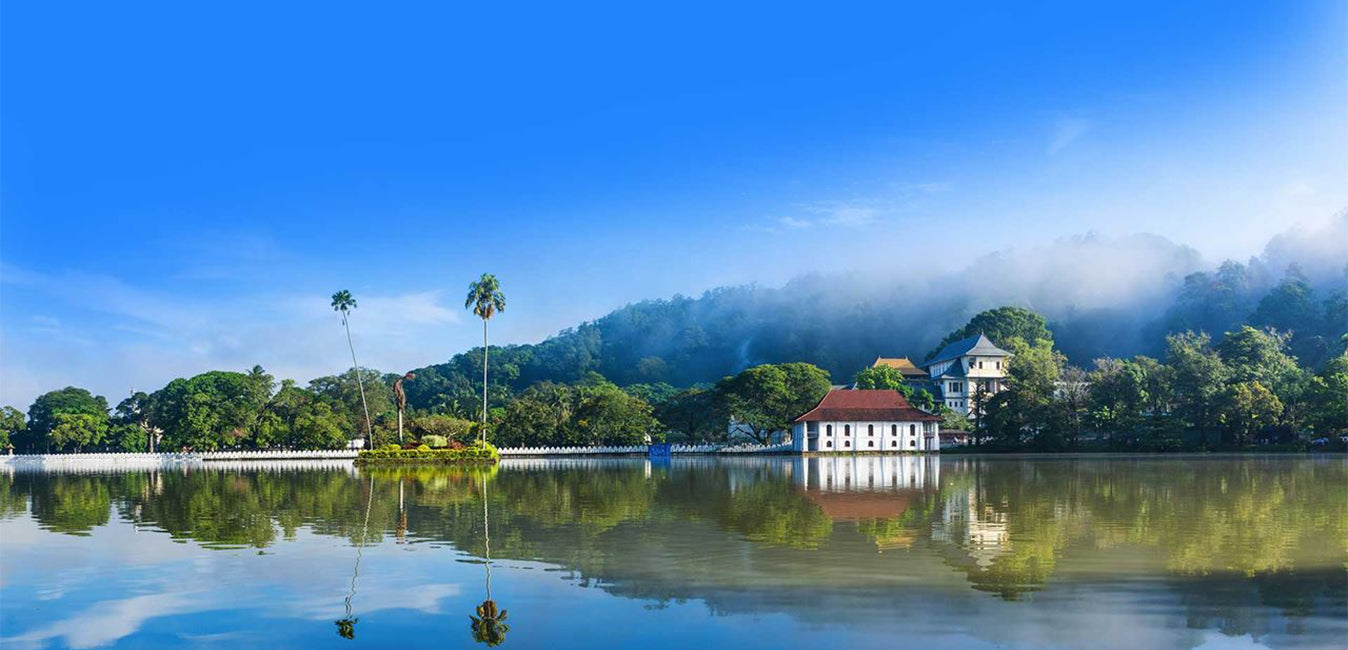
Kandy district is situated in the centrel province of Sri Lanka. One of the seven World Heritage Sites in Sri Lanka, Kandy was once home to the Kandyan Kings of yore in the 16th-century and a fountainhead for all the music, arts, crafts and culture in the country. About 129 km away from Colombo, Kandy is ensconced amongst a hilly terrain and all eyes are drawn to the centre of the city, where the Kandy Lake forms a charming feature. Kandy retains great religious significance for Sri Lanka, because it is in this charming city that the Dalada Maligawa or "Temple of the Tooth" is located, within which the sacred tooth relic of Lord Buddha lies well guarded.

The Royal Botanical Garden, Peradeniya is situated about 5 km to the west of the city centre at Peradeniya and is visited by 1.2 million people per year. It is the largest botanical garden on the island. The Udawatta Kele (Udawatta Forest) is a protected sanctuary situated in the heart of the city, just north of Temple of the Tooth.

Kandy is a Sinhala majority city; there are sizeable communities belonging to other ethnic groups, such as Moors and Tamils. Kandy is second only to Colombo the center of the Sri Lankan Economy. Many major co operations have large branch officers in Kandy and many industries include textiles, furniture, Information Technology and jewellery are found here. Many agriculture research centers are located in the city.

And a fountainhead for all the music, arts, crafts and culture in the country. About 129 km away from Colombo, Kandy is ensconced amongst a hilly terrain and all eyes are drawn to the centre of the city, where the Kandy Lake forms a charming feature. Kandy retains great religious significance for Sri Lanka , because it is in this charming city that the Dalada Maligawa or Temple of the Toothis located, within which the sacred tooth relic of Lord Buddha lies well guarded.

About Central Provincce

The Central Province of Sri Lanka consists primarily of mountainous terrain. The province has an area of 5,674 km², and a population of 2,421,148. Some major towns include Kandy, Gampola (24,730), Nuwara Eliya and Bandarawela. The population is a mixture of Sinhalese, Tamil and the Moors.

Both the hill capital Kandy and the city of Nuwara Eliya are located within the Central Province as well as Sri Pada. The province produces much of the famous Ceylon tea, planted by the British in the 1860s after a devastating disease killed all the coffee plantations in the province. Central Province attracts many tourists, with hill station towns such as Kandy, Gampola, Hatton and Nuwara Eliya. Temple tooth or Dalada maligawa is the main sacred place in Centrel province.

The climate is cool, and many areas about 1500 meters often have chilly nights. The western slopes are very wet, some places having almost 7000 mm of rain per year. The eastern slopes are parts of the mid-dry zone as it is receiving rain only from North-Eastern monsoon. The Temperatures range from 24°C at Kandy to just 16°C in Nuwara Eliya, which is located 1,889 m above sea level. The highest mountains in Sri Lanka are located in the Central Province. The terrain is mostly mountainous, with deep valleys cutting into it. The two main mountain regions are the central massif and the Knuckles range to the east of Kandy.