

Mirissa Samudragiri Viharaya
Veragalla Samudragiri Viharaya lies on a coconut grove close the beaches of Mirissa thus its also called Mirissa Viharaya. Origins of this temple is not well documented but there is proof that this temple has existed in the 18th century. According the forklore, there has been small temple which were used by the priests who come to Mirissa to carry out their daily rituals.
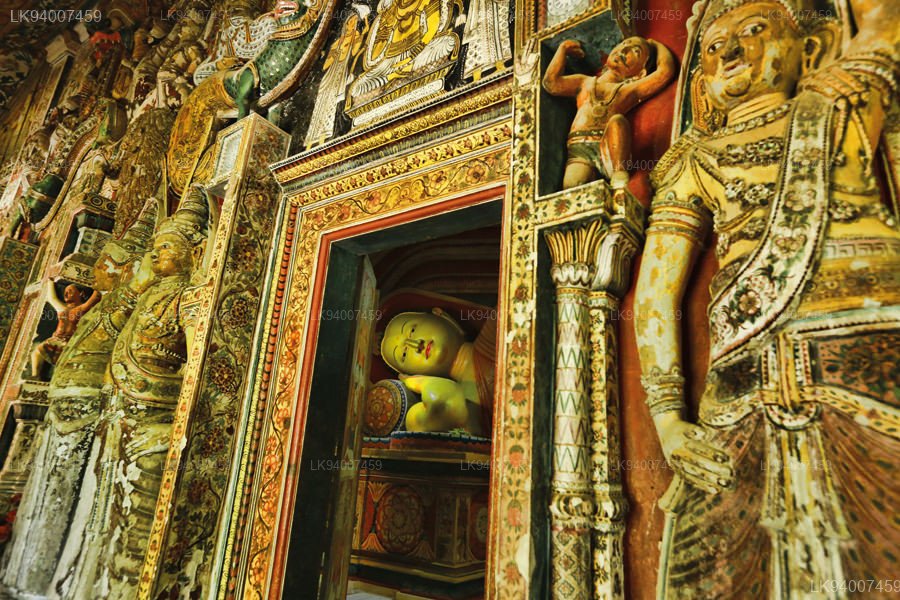
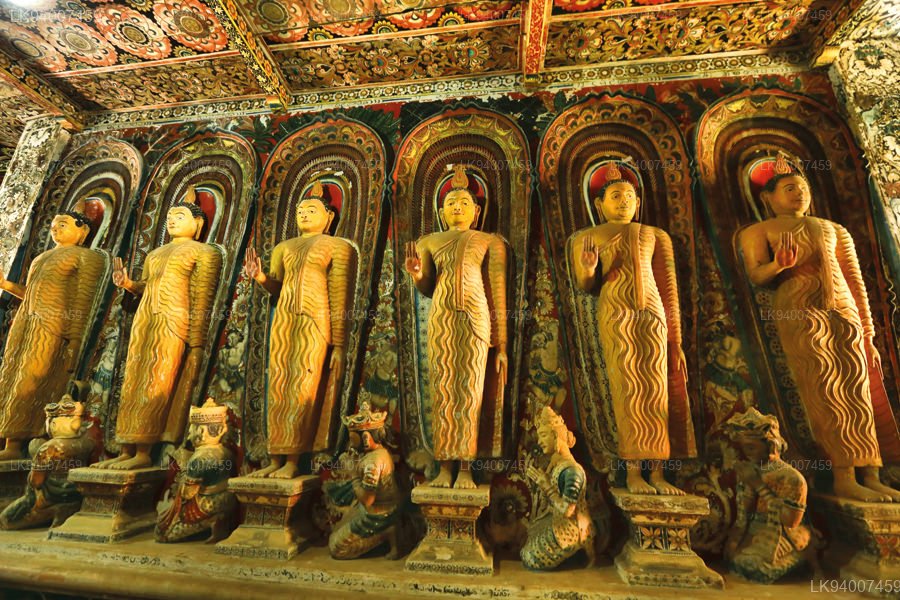
This site has been declared as a national heritage site due the murals on the image house belonging to the Kandyan Era. This is one of the few sites where murals representing the Matara traditional temple artistic style is well preserved. During the Kandyan Era, the low country which was under control of European countries developed its unique artistic styles by adding variations to the Kandyan artistic style influenced by Europeans .
All the temples which was under the Kandyan Kingdom during this era followed a defined style of art in all temple paintings with almost no variation but the low country artists freely introduced style changes to these murals.
The best murals in the temple are located in the image house on the walls outside the inner chamber. The wall is divided in to number of strips. Various life events of the prince Siddhartha is drawn on the top most strip. Various Jathaka Stories have been drawn on the lower strips.
Kanthiwadi Jathakaya, Sasa Jathakaya, Sama Jathakaya, Kurudamma Jathakaya and Devadamma Jathakaya are found depicted on the walls. Kurudamma Jathakaya has been given more prominence compared to others. The murals are drawn on a dark red background.
According to the well known archaeologist professor Senaka Bandara, the murals of the Veheragalla Samudragiri Viharaya image house is unique. The murals of the temple clearly shows the low country Matara style of art. Most temples built on the coastal lines in the 18th and 19th century were influenced by the Rococo artistic style but this is one of the few temples where you would find a significant number of well preserved murals which uses the low country Matara artistic style.
The traditional Kandyan style murals utilizes a limited range of well defined colors and uses red for the background. The Matara style murals uses a wider range of colors and utilities other darker colors such as black for the background. These murals also uses leaves and branches in addition to flowers to fill the backgrounds instead of only flowers which is used by the Kandyan styles murals. The cloths and head dresses of the figures also is different showing some European influence.
There are three entrances to the inner chamber of the image house. Each entrance is decorated with a relief of a dragons arch. One dragon arch is sculptured around a picture


